
Nature
Trasimeno Cycle Path
Marmore Falls

Subasio Parks
Rasiglia
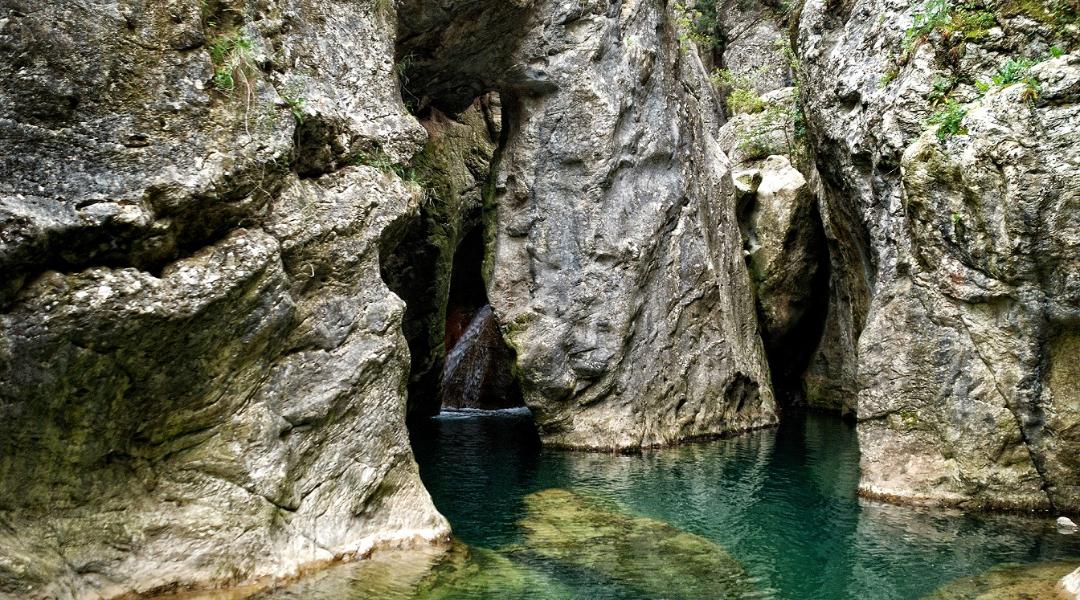
Devil’s Dens (Parrano)

Mole di Narni
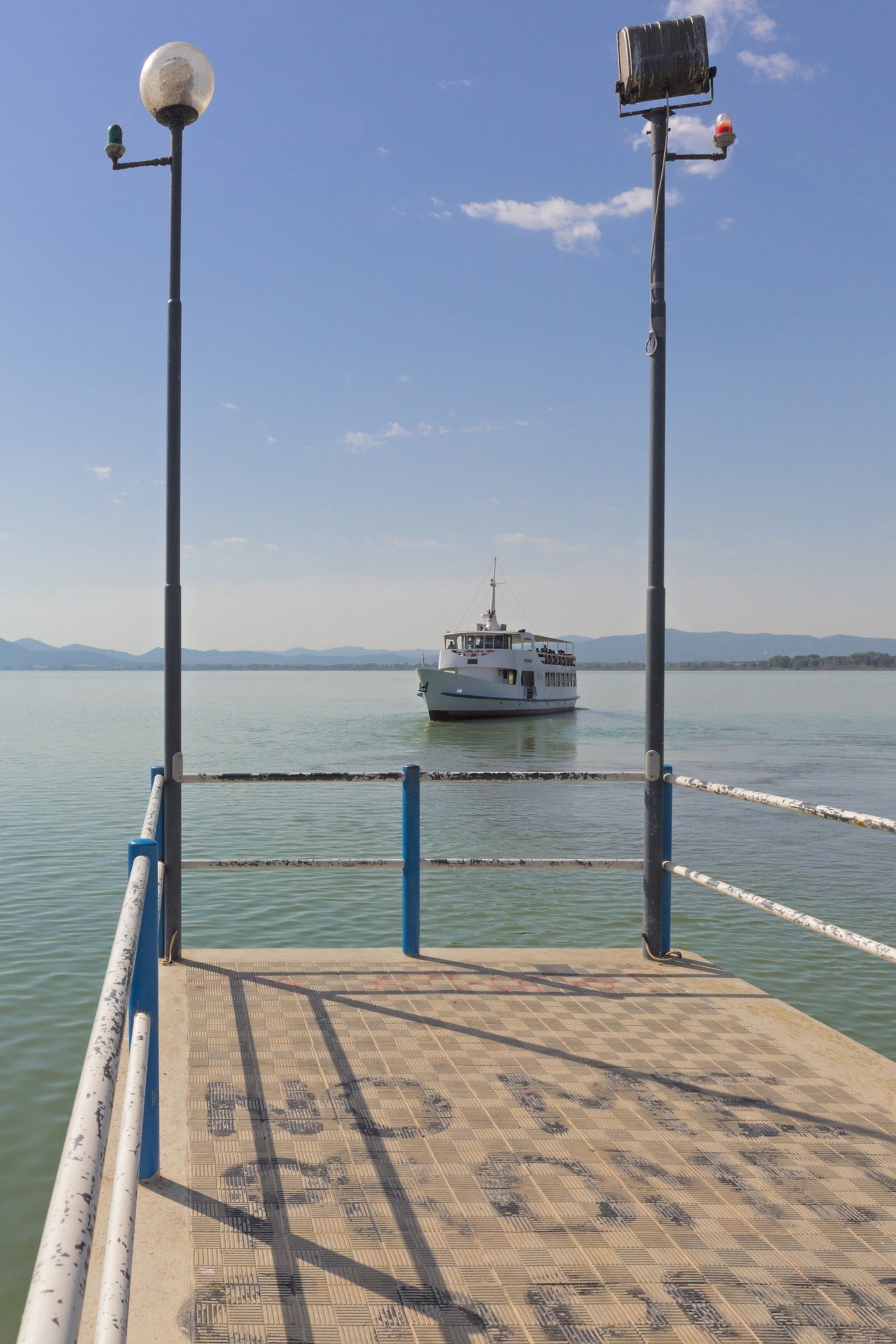
Lake Trasimeno
Umbria, with its mild climate and natural beauty, is a true paradise for outdoor lovers — and Lake Trasimeno is one of its most precious gems. This enchanting place offers serenity and peace, far from the hustle of everyday life. Enjoy a stroll along its shores, breathe in the fresh air, and take in the wonderful landscapes all around you.
Surrounded by gentle hills and breathtaking vistas, this splendid lake offers a unique experience for nature and landscape enthusiasts. With its calm, crystalline waters, Lake Trasimeno is perfect for activities such as kayaking, sailing, or simply a relaxing swim. Its welcoming beaches are the ideal spot to sunbathe while enjoying spectacular views over the serene waters.
But the lake is not the only natural treasure Trasimeno has to offer. Hiking trails run along the shoreline and allow you to explore the surrounding beauty. From panoramic walks to longer hikes, there are options for every fitness level and interest. The paths offer the chance to immerse yourself fully in nature, discovering the local flora and fauna.
In addition, several nearby islands are well worth a visit. Isola Maggiore is famous for its spectacular sunsets and the charm of its ancient hamlets. Isola Polvese, on the other hand, offers a peaceful atmosphere and nature trails perfect for birdwatching and restorative walks. Finally, Isola Minore is home to a fascinating medieval castle that merits a visit.
Explore its waters, discover its islands, and follow the trails that lead to breathtaking viewpoints. Lake Trasimeno awaits to gift you an unforgettable experience in close contact with the natural beauty of Umbria.

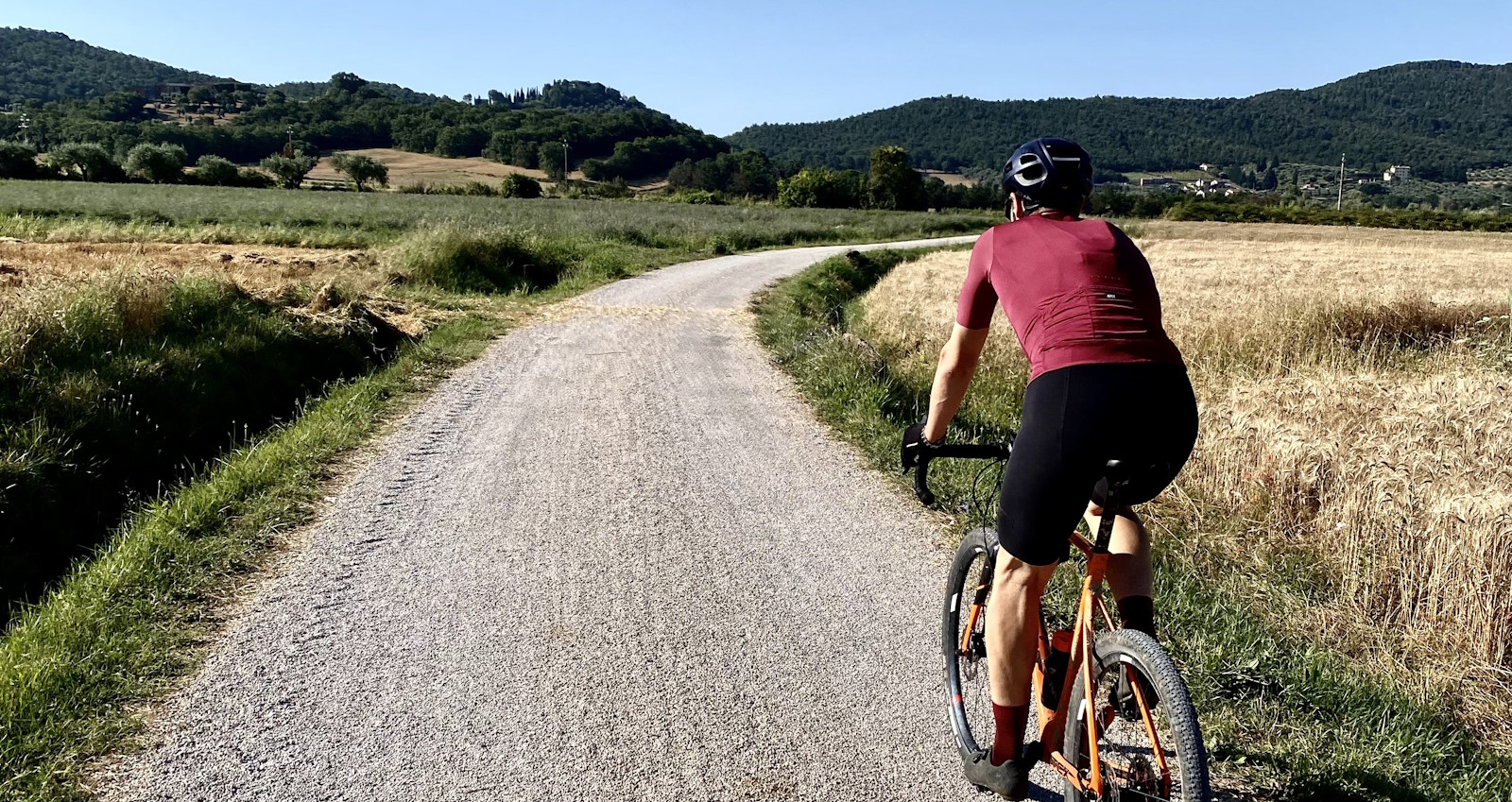
Focus: Trasimeno Cycle Ring
Beyond water activities such as kayaking and sailing, Lake Trasimeno is also a paradise for two‑wheel enthusiasts. The Trasimeno Cycle Ring runs along its shores — a panoramic route of about 60 kilometers that lets you explore the entire area by bike. The route suits all experience levels and offers sweeping views of the lake and the surrounding countryside.
The Trasimeno Cycle Ring is perfect for a leisurely day in the saddle, immersed in nature and tranquility. Along the way, you can visit picturesque towns on the lakeshore such as Passignano sul Trasimeno, Tuoro sul Trasimeno, and Castiglione del Lago. These charming places invite you to discover local culture, savor delicious Umbrian cuisine, and enjoy stunning vistas from their lovely little squares.
Along the route you’ll also find numerous rest areas — ideal for a break to admire the scenery and snap unforgettable photos. You can stop at quiet beaches for a refreshing dip in the lake or at viewpoints that showcase the surrounding beauty.
The cycle ring is easy to access and well signposted throughout. You can rent bikes nearby or use your own to enjoy this unique experience to the fullest. We recommend comfortable clothing and bringing water and snacks to refuel along the way.
Whether you’re passionate about cycling or simply looking for a relaxing outdoor activity, the Trasimeno Cycle Ring offers the chance to discover Umbria’s natural and cultural beauty. Pedalling along the lakeshore, you’ll lose yourself among breathtaking views, enchanting villages, and an atmosphere of peace and quiet.
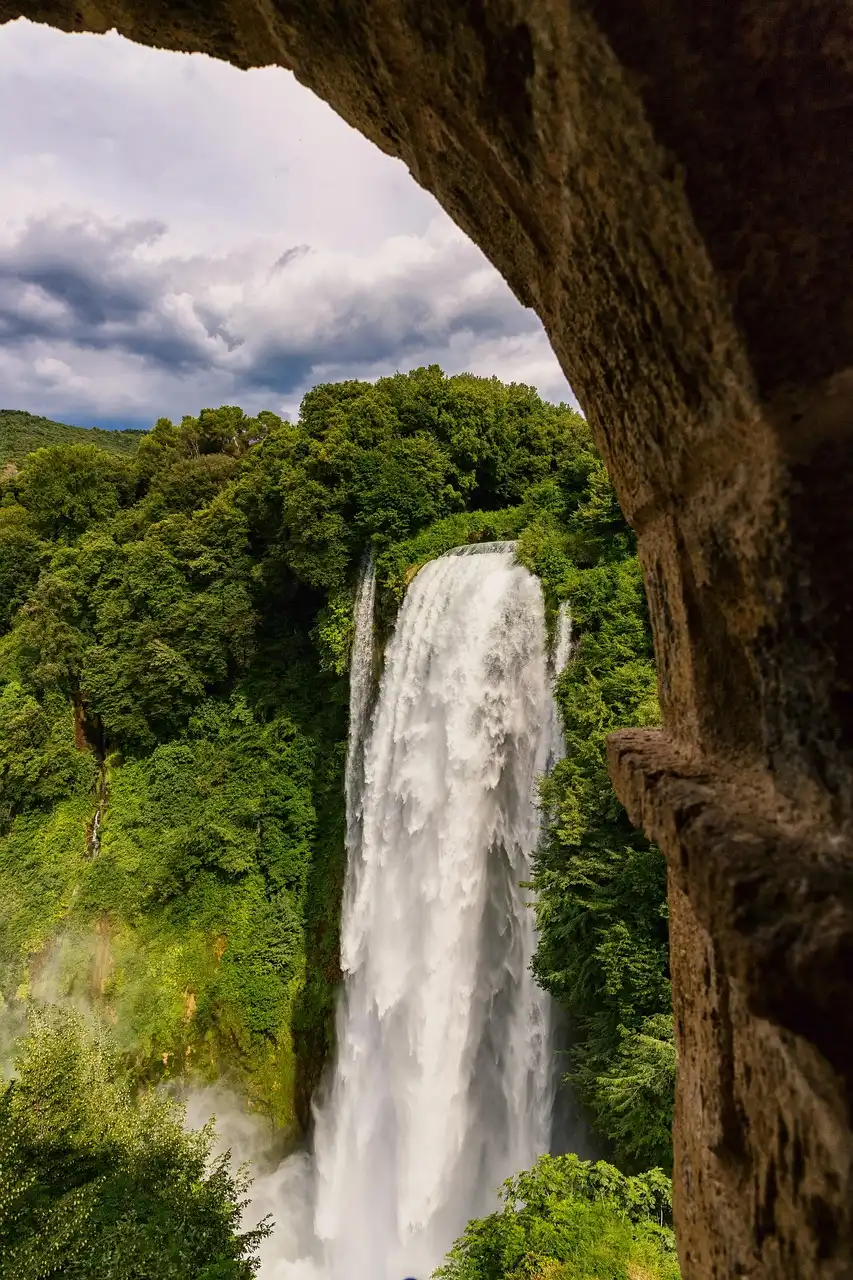
Marmore Falls
Situated near the city of Terni, the Marmore Falls offer a breathtaking spectacle of water plunging through a series of cascades, creating an atmosphere of pure beauty and power.
The Marmore Falls are considered one of the tallest man‑made waterfalls in Europe, with a total drop of about 165 meters. This marvel was created by the Romans in 271 BC to divert the waters of the Velino River and prevent flooding of the plain below. Today, the falls are fed by the Nera River and have become one of Umbria’s most popular attractions.
A visit to the Marmore Falls is a unique encounter with nature and wild beauty. Trails lead to various panoramic viewpoints, allowing you to admire up close the power of the water as it carves its way through the rocks. Several strategic lookouts let you capture extraordinary photos and fully enjoy the natural show.
For those who wish to get even closer, you can join an exciting boat excursion that takes you to the foot of the falls. This one‑of‑a‑kind experience immerses you in the roar of the water and heightens your appreciation for the falls’ majesty.
The surrounding area also offers a variety of outdoor activities for nature lovers. Explore the nearby trails, immerse yourself in the beauty of the woods, spot local flora and fauna, or enjoy a picnic at one of the many scenic points.
The Marmore Falls offer an unforgettable experience for all visitors. Comfortable clothing and hiking shoes are recommended, as some sections of the trails can be steep or slippery.
Subasio Parks
Imagine walking where every breath is a caress of pure air and every step brings you closer to the heart of the most authentic Umbria. The Subasio parks await like a green embrace stretching across gentle hills — a refuge where the haste of the modern world dissolves into the whisper of wind through the leaves.
Here there aren’t just trails, but true pathways of the soul weaving through woods where time seems to have stopped. Each route has its own personality: some lead you gently through flower‑filled meadows, others challenge you with climbs that reward your effort with heart‑stirring vistas. Mount Subasio, a majestic guardian at 1,290 meters, watches over all this splendor. From its summit, the world opens before your eyes: the Umbrian countryside unfolds like a hand‑painted canvas, medieval villages dot the hills like precious gems, and on the clearest days even the Adriatic Sea greets you with a glimmer on the horizon.
But the true magic of these places lies in the life that animates them. Look up and you might spot the majestic flight of a peregrine falcon dancing in the sky, or hear the mysterious call of a wolf guarding the mountain’s secrets. When spring arrives, it’s as if nature throws a celebration: meadows turn into rainbows of wildflowers that perfume the air and paint every corner with strokes of pure joy.
There’s something deeply moving about walking where Saint Francis found his peace. The Hermitage of the Carceri is not just a historic site, but a corner of the world where silence has a different weight — where every stone seems to tell stories of prayer and contemplation. Here, among the oaks that have witnessed centuries, even the most hurried visitor finds a moment to pause and listen to their heart.
These parks know how to welcome every kind of traveler. If you love birdwatching, get ready to fill your notebook with wonderful sightings. If you’re after the simple pleasure of a family picnic, you’ll find perfect spots to spread your blanket while children run free in the grass. Cyclists will discover routes that turn every pedal stroke into an adventure, while benches and rest areas along the way invite you to stop, breathe deeply, and let the beauty of the moment fill you completely.
Coming here is as simple as lacing up your most comfortable shoes, filling a water bottle, and bringing only your sense of wonder. Respect for this treasure comes naturally: in a place this special, every gesture becomes an act of love toward the nature that welcomes us.
The Subasio parks aren’t just a Sunday outing. They’re an invitation to slow down, to rediscover the pleasure of walking without hurry, to let Umbria’s beauty enter your heart and stay there. Here, among grass‑scented trails and silences that heal the soul, every visitor finds their own piece of earthly paradise.
Rasiglia
Rasiglia: the Little Venice of Umbria where water tells a thousand years of history
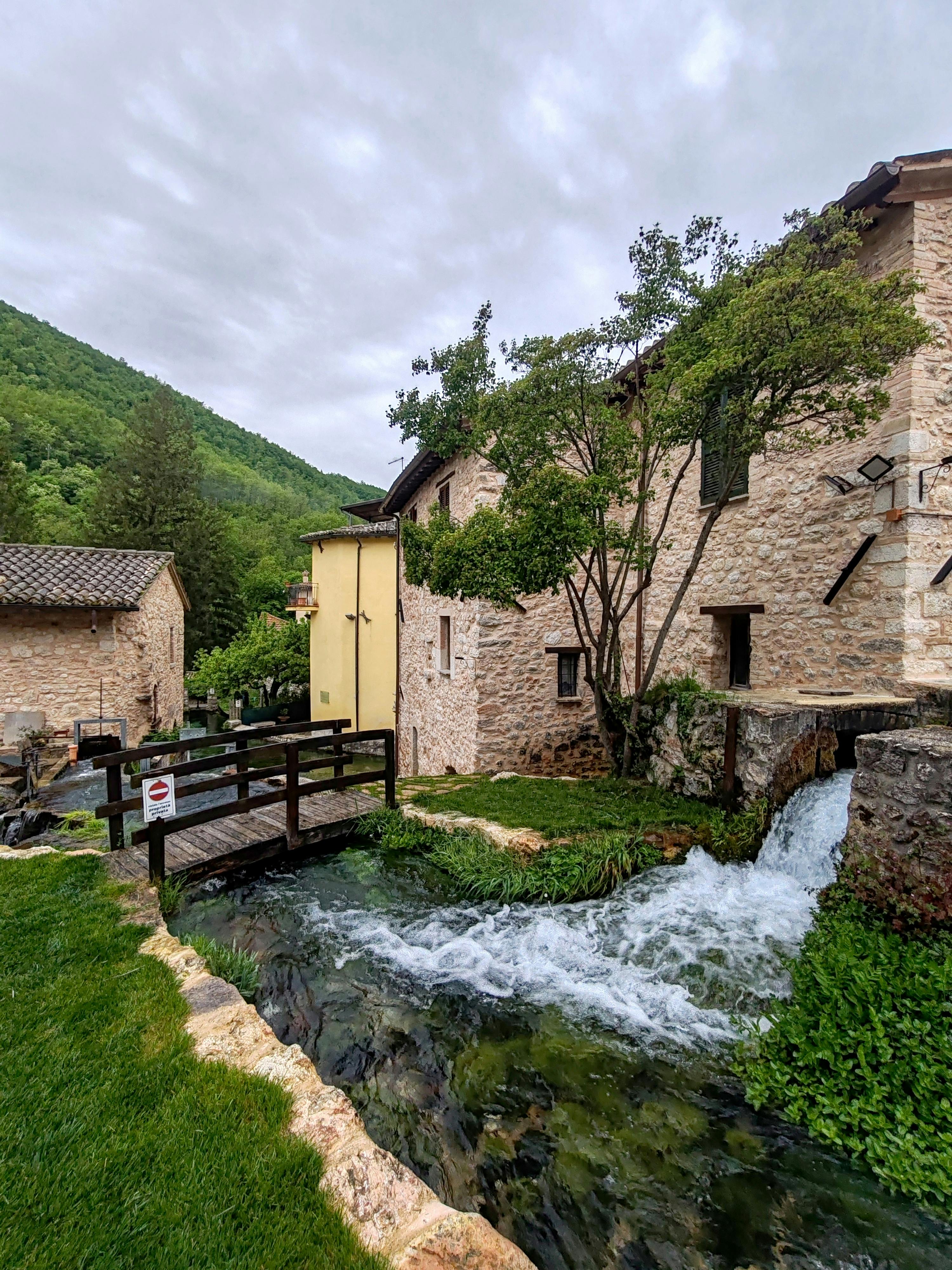
Deep in Umbrian woodland, over 600 meters above sea level, lies a village that seems lifted from a fairy tale: Rasiglia. It’s a hamlet, tucked among forests, like a “jewel box” where the thread of history is interwoven with unspoiled nature and a hard‑working past. Mills, spinning houses, springs, art, and faith are the elements that, layered together, define this place: Rasiglia. Set in the Menotre Valley, just 18 kilometers from Foligno along state road 319 (Sellanese), this medieval gem is a place where time seems to stand still and every stone whispers stories of a tradition‑rich past.
The magic of Rasiglia springs from the element that has shaped its identity for over a millennium: water. The spring that feeds and flows through Rasiglia is Capovena: it rises in the upper part of the village, at the foot of the palace occupied by the Trinci (lords of Foligno between 1305 and 1439) during their rule, and runs through the hamlet forming rivulets and little cascades that gather into a large basin called the “Peschiera” before pouring into the Menotre River. It’s a spectacle that enchants the senses: as you wander the evocative lanes of the center, it’s impossible not to be captivated by the waterways coursing through the settlement, creating an atmosphere unique in the world.
An amphitheater of stone and springs
Located in the Menotre Valley, just 18 km from Foligno, Rasiglia is a seam of rock and spring, split among grey‑green beech woods and fragrant broom. It’s an oasis in the mountains where, more than a thousand years ago, people decided that stone would become home and water a trade. The village preserves the typical features of a medieval hamlet, gathered in an amphitheater‑like layout where each house seems built to converse with the liquid element flowing through it.
The springs that give life to this natural spectacle are several: besides the main Capovena, there are Alzabove and Venarella, which shape and define this natural wonder. The origin of the hamlet is represented precisely by Capovena, which breaks from the earth upstream and branches into channels that slide along the backs of the houses, wearing their flanks smooth with every season.
The tradition that lives in water
What makes Rasiglia truly special is that water is not merely decorative but the beating heart of a millennia‑old tradition. Even today, life in this splendid village is paced by water: from weaving to wool processing and dyeing — an ancient tradition revived from as early as the 1200s.
The textile industrial‑archaeological park of Rasiglia is a rare example of preserving every element needed for textile production, from shearing to the finished product. Here you can witness the transition from hand looms to water‑powered looms, which, at the beginning of the 20th century, were replaced by the Jacquard mechanical loom that revolutionized weaving worldwide. Walking through these places, it’s moving to imagine the tireless work of artisans who, for centuries, harnessed the power of water to create fine fabrics.
A journey among bridges, mills, and springs
As soon as you enter the village you encounter the Roman Bridge; built in stone in the 3rd century BC, it spans the Menotre River and offers a striking view of the surrounding nature. It’s the perfect welcome to a village that delights at every step. In the center of the main square stands an ancient, still‑working fountain — the village’s principal water source until the 18th century — decorated with a beautiful ceramic mosaic.
The Rocchetta water mill, dating to the 18th century, still preserves its old millstones and equipment used to grind grain. It’s a plunge into the past that shows how human ingenuity transformed the natural force of water into a tool for work and livelihood.
In the Museum of Waters, housed in the former church of San Salvatore, you can admire a wide collection of ancient objects and equipment used to manage water in the Umbrian territory — a fascinating journey through the history of local hydraulic engineering.
Events that make the village magical
Rasiglia knows how to turn into a dream set during its most important festivities. Each year two major events take place: the live Nativity at Christmastime (26 December and 6 January) and “Penelope a Rasiglia” in June, dedicated to the ancient crafts of weaving.
Rasiglia’s live Nativity is an experience that touches the heart: the entire hamlet becomes a mountain Bethlehem, where residents stage scenes of the Nativity among rivulets lit by soft lights. “Penelope a Rasiglia,” on the other hand, celebrates the village’s textile tradition with live demonstrations of old crafts and the chance to see traditional looms in action.
Practical information for visiting
Rasiglia is open to the public with seasonal hours designed to help you enjoy its beauty at its best:
- 21 March – 30 June: Saturdays, Sundays, holidays and holiday eves from 9:00 to 13:00 and 15:00 to 19:00
- 1 July – 15 September: Monday to Sunday from 9:00 to 13:00 and 15:00 to 19:00
- 16 September – 31 October: Saturdays and Sundays from 9:00 to 13:00 and 15:00 to 19:00
- November, December, and January: holidays and holiday eves from 9:00 to 13:00 and 15:00 to 19:00
- Closed on the mornings of 25 December and 1 January and from 1 February to 20 March
A place that nourishes the soul
Rasiglia is not just a village to visit — it’s an experience that nourishes the soul. A place outside of time, with magnetic, irresistible charm, where the rushing murmur of water accompanies every lane. Here, among stone houses and channels that mirror the sky, you discover how people can live in harmony with nature, turning a natural element into a source of life, work, and beauty.
Walking through Rasiglia is a journey through time, where every drop of water tells a different story: of artisans weaving to the rhythm of looms, of millers grinding grain, of a community that built its identity around a spring. It’s an invitation to slow down, listen to the song of water against the stones, and rediscover that human, authentic dimension only truly special places can offer.
Rasiglia awaits to show you that sometimes the most precious treasures hide in the smallest places — where water is not only life, but poetry cast in stone and time.
Devil’s Dens (Parrano)
Imagine descending into the depths of the earth, where every drop of water has sculpted stone stories for millennia and the echo of ancient peoples still seems to whisper among the rocks. Parrano’s Devil’s Dens are a series of karst caves opening along a long rock face shaped over millennia by the Fosso del Bagno, just two kilometers from the town of Parrano — a place that won’t leave you indifferent.
These are not simple natural cavities: they are treasure chests of mystery holding secrets three thousand years old. Inside these caves, archaeologists have found artifacts dating from the Paleolithic and Bronze Ages. Most striking of all is discovering that these places hosted ancestral rituals whose meanings we can only imagine today. According to scholars, the Devil’s Dens were frequented over the centuries for rites that involved breaking animal bones and burning grains of wheat, legumes, broad beans, and other cereals. The shiver one feels walking through these spaces intensifies on thinking that, in places, human bones have even been found.
The complex consists of eight caves that open like mysterious eyes at different heights along the banks of the ravine, but only three have fully revealed their secrets to modern archaeologists: the Lower Main Den, the Upper Main Den, and the Beech Den — those with entrances on the right side near natural stone arches. These arches create an almost theatrical atmosphere, as if nature itself had framed the doorway to lost worlds.
The treasures recovered from these caves now rest safely in museums, though their story continues to fascinate. Finds from the Dens are housed at the National Archaeological Museum of Perugia and at Parrano’s Territorial Documentation Center, which also conserves a rich funerary assemblage from a 6th–5th century BC tomb discovered by chance in 1993 at Podere Soriano, about a kilometer from Parrano. Among these treasures, one in particular captures the imagination: a kylix, a ceramic cup with two horizontal handles from Greece, part of a set that tells the story of a well‑to‑do family of the past.
But the caves aren’t the only surprise awaiting you. At the beginning of the gorge rises a spring with a marked thermal phenomenon, its waters flowing at around 28 °C. Here you’ll find a thermal pool — perfect for a restorative soak after the caves! Imagine the contrast: from the cool, mysterious depths of the caverns to the warm, healing waters of this corner of natural paradise.
The Devil’s Dens Loop: an adventure for brave hearts
Suitable for: hiking
Interest: geology, archaeology
Start: Parrano
Duration: 4 h 30 min
Difficulty: EEA — for expert hikers with equipment
Length: 9.0 km
This isn’t a trail for everyone: it’s an experience that tests your spirit of adventure. The loop starts in the medieval village of Parrano, clustered around its 11th‑century castle, and takes you on a journey that’s both physical and emotional. The route requires proper gear and a good dose of courage, as you’ll tackle aided sections with rungs and ropes to explore the cavities opening along the gorge walls.
The trail leads through ever‑changing landscapes: dirt roads to the casale del Bagno, a ford across the stream near natural rock arches, and the spectacular cliff faces where the caves hide. Your reward is immense: not only the discovery of a unique archaeological heritage, but also the satisfaction of a genuine adventure in one of Umbria’s most mysterious places.
Stories and legends that still live on
In the heart of Parrano lies a special treasure: inside the town hall a display case guards a precious object — the Green Venus, a small sculpture representing a female deity. This little masterpiece is tangible proof of the fascination these places held for our ancestors.
The modern history of the Dens begins with scientific curiosity: the first to take interest was geologist Bernardino Lotti in 1900, but it took 33 years for a thorough excavation campaign to be funded — at the initiative of private individuals. In 1933 Prince Edmondo Ruspoli, vacationing at his castle in Parrano, became enamored with the Fosso del Bagno caves and involved his brother‑in‑law, Count Gilberto De Chambrun. It’s fascinating to think of aristocrats and scholars united by a passion for these underground mysteries.
Parrano also gave birth to a leading figure of Italian science: in 1862 Sante De Sanctis was born here — one of Italy’s most important scholars of psychology. As a psychiatrist, university professor, and journal founder, he helped cement the reputation of psychiatry in Italy and established the country’s first child neuropsychiatry department.
Today this Umbrian jewel still moves to an older rhythm: since 2007 Parrano has been part of the Cittàslow network, a recognition that celebrates its ability to preserve authenticity and quality of life.
Parrano’s Devil’s Dens are more than a tourist destination: they’re a doorway to the past — an invitation to confront the mysteries of history and nature. Here, among rocks shaped by water and traces of lost civilizations, every visitor can feel part of a millennia‑long story that continues to this day.
Mole di Narni
There’s a place in Umbria where reality outshines fantasy — where the crystalline waters of the Nera River create a natural spectacle so stunning it feels lifted from a fable. The Mole di Narni are an oasis of white rock and clear water set along the Nera Gorges, just a few kilometers from the medieval town of Narni. This corner of paradise holds a magic that goes beyond beauty: Narni itself — about 15 km from Terni — is famed among fantasy‑literature fans for inspiring the British author C. S. Lewis as he wrote his “Chronicles of Narnia.”
When you arrive at the Mole di Narni, the first sensation is that you’ve been transported to another world. Everything recalls a Caribbean cove in the heart of Italy: trees and plants forming a green canopy as far as the eye can see, chalk‑white rocks on the banks and riverbed, and crystalline water flowing in a changing palette — deep cobalt in the deeper pools to aquamarine in the shallows. It’s a kaleidoscope of colors that shifts with the sunlight: deep turquoise blending into emerald hues, casting reflections that dance across the surface.
But there’s a crucial point every visitor must know: although the landscape looks inviting and the temptation to swim is strong, bathing is strictly forbidden here because of the river’s current and sudden, unpredictable surges caused by the automatic release from the nearby dam. The Mole sit downstream from a hydroelectric dam; when it opens, the water level can rise by more than a meter in moments, creating extremely dangerous conditions.
A place of wonder and awareness
Local authorities have introduced measures to manage visitor numbers and improve safety. Entry to the Mole is paid and requires booking a time slot. The cost per person is €8, with a morning slot (10:00–13:45) or an afternoon slot (14:00–17:45). This controlled system not only helps preserve the environment but also ensures visitors are better informed about the risks.
The water temperature is another factor to consider: it hovers around 12 °C — icy for anyone arriving overheated. Even if swimming were allowed, such cold water would demand great caution to avoid thermal shock and cramps.
How to reach this hidden paradise
You can drive from Narni along the state road that follows the river for about 10 km, take the train to Nera Montoro station and walk the final stretch, or cycle along the corresponding greenway. You can also book a parking space (fee €5); access hours are 09:45–18:00. Parking is located near Nera Montoro railway station.
The most scenic route follows the old railway: the Nera Gorges and the six‑kilometer cycle‑pedestrian path built on the former track accompany the river’s waters with a constant spectacle. Walking or pedalling along this trail, every bend reveals new vistas where the Nera flows on to meet the Tiber, forming natural pools in vivid turquoise and emerald.
A journey through history and nature
The charm of the Mole grows as you discover the area’s rich history: from Augustus’ Bridge and the hill‑top Abbey of San Cassiano overlooking the trail, to the hamlet of Recentino and its springs, then the waterside village of Stifone, right up to the natural pool of the Mole di Narni — a continuous succession of historical and natural highlights.
Stifone deserves special attention: known as the “village on the water,” it’s a little gem set in the rock beneath Taizzano Castle, home to a port and shipyard — still visitable — where the Romans built large vessels. It’s fascinating to imagine that two thousand years ago Roman warships and merchant ships were constructed here.
Experiences to enjoy safely
None of this prevents you from spending a relaxing day at the Mole di Narni, thanks to the many nearby attractions. A wooden solarium built by local authorities lets you bask in the sun and soak up the view in safety, and there are places to eat nearby to round out the experience.
For the more adventurous, the area offers excellent opportunities for hiking and mountain‑biking. It’s a paradise for trekkers, runners, and cyclists who can enjoy the scenery while walking or riding the greenway along the old railway. Each season paints a different scene: spring bursts into color, summer heightens the contrast between intense green and turquoise water, and autumn cloaks everything in gold and red.
An invitation to mindful discovery
The Mole di Narni encapsulate everything Umbria does best: extraordinary natural beauty, millennia of history, and the touch of magic that inspired one of the great works of fantasy literature. In terms of distance from Rome, Narni is about 82 km as the crow flies and roughly 86 km by road — about an hour and a half by car.
Visiting the Mole di Narni means immersing yourself in an experience that goes beyond simple tourism: it’s an encounter with nature at its most spectacular, a journey through the history that shaped these places, and a lesson in environmental respect. Here, where waters mirror the sky and white rocks tell millennia of history, every visitor can rediscover that sense of wonder only truly special places can offer.
The Mole di Narni await to show you that sometimes paradise isn’t far away at all — you just need to know where to look, and how to respect it.